Structure discovery by research category
Category navigation lets visitors browse a specialized catalog through a consistent information architecture.
CASE STUDY · Specialized e-commerce · Research catalog · Wholesale
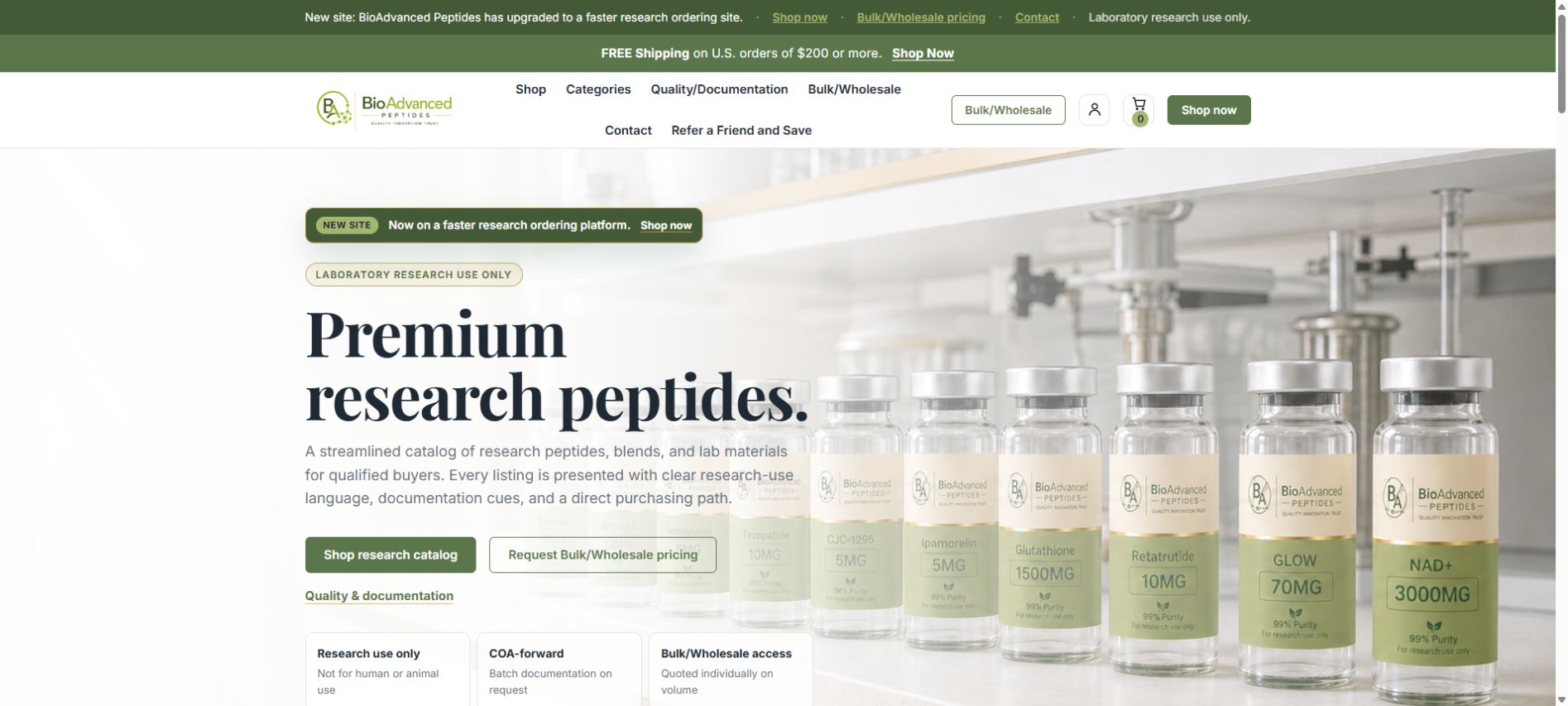
A research-materials commerce website with category-based discovery, documentation cues, qualified-buyer messaging and a separate wholesale inquiry path.
THE PROJECT IN DEPTH · BIOADVANCED PEPTIDES
A research-materials commerce website with category-based discovery, documentation cues, qualified-buyer messaging and a separate wholesale inquiry path.
01 / THE CONTEXT
The BioAdvanced Peptides public website presents research materials through categorized listings, quality/documentation information and wholesale inquiries.
The site emphasizes laboratory research use and states that products are not for human or animal use. It also references certificates of analysis and qualified-buyer communication.
Those statements are site claims, not proof of product identity, purity, regulatory status or fulfillment practices. A credible technology case study must maintain that distinction.
02 / THE STRATEGY
Category navigation lets visitors browse a specialized catalog through a consistent information architecture.
Dedicated quality information and certificate-of-analysis explanations create an obvious route for research documentation questions.
Volume buyers receive a distinct request path rather than being forced through ordinary retail product browsing.
Research-use notices appear prominently. Actual age verification, buyer eligibility and regulatory controls require independent review.
03 / CUSTOMER & TEAM EXPERIENCE
04 / THE PLATFORM
Specialized catalog taxonomy and product pages.
Quality and documentation content.
Wholesale inquiry routing.
Policy and research-use notice surfaces.
05 / THE OUTCOME & EVIDENCE
A publicly accessible specialized catalog emphasizing structured discovery and buyer-facing documentation.
We do not substitute invented percentages for verified business results. The following are the relevant indicators for an evidence-based performance review:
06 / ROADMAP
Relevant for: Specialized B2B catalogs and regulated-product businesses requiring careful information architecture.
This case is about digital product organization and documentation access, not endorsement of research substances or their use.
REPLACE SUBSCRIPTIONS. SAVE MONEY. TAKE OWNERSHIP.
Identify the workflows to replace, the data to migrate, and the capabilities your customers need. Scope, costs and ownership terms are agreed before development.
Plan your platform →